
Purpose.
SELF CONTAINED UNDERWATER AIR BREATHING APPARATUS (SCUBA)
PART I — GENERAL INFORMATION
(a) The requirement of Self Contained Underwater Air Breathing Apparatus (SCUBA) is to enable a diver
to breathe underwater using this set up to a depth of 35 meters. The equipment is required for
undertaking a diving operation in lakes/rivers/reservoirs/open water (sea) and to assist the diver to
undertake the task in a safe and hazard-free manner.
(b) The SCUBA set should indicate the reserve air pressure and should also supply air for inflation of the
Buoyancy Jacket (Buoyancy Control Device) for emergency ascent to the surface. The equipment is
required to supply continuous compensated air to a diver at the depth he is diving.
Regulation/Standards.
The Self Contained Underwater Air Breathing Apparatus (SCUBA) should comply to certification as per
EN250:2014 (for testing & marking of Respiratory Equipment) or equivalent Standards (EN 16972:2020,
EN 13274-2:2019, EN13274-7:2019, EN148-1:2018, EN 14594:2018).
Functionality.
The equipment should be capable of being used by any diver underwater during a diving operation.
The role of each item should be as per characteristics enumerated along with the description/ main features.
PART II
OPERATIONAL CHARACTERISTICS AND FEATURES OF SELF CONTAINED
UNDERWATER AIR BREATHING APPARATUS
Introduction. Self-Contained Underwater Air Breathing Apparatus (SCUBA) is used to enable a diver to
dive up to depths of 35mts. As the name suggests the equipment is self-contained in terms of air supply for
the diver and has an inbuilt capacity to regulate air pressure in accordance with the depth of dive.
General. The characteristics of each sub-assembly of Self Contained Underwater Air Breathing Apparatus
(SCUBA) are as follow: -
(a) Full Facemask. The facemask should be with breathing valve assembly and have a positive
pressure (of at least 01 Mili Bar) inside. The mask should have provision to integrate with
‘Underwater Communication System’ (DUCS as well as WUCS) and should fit on the divers face
without any ingress of water. The straps should hold the mask in place even in strong current (2 -
3 knots).
163
(b) Octopus Assembly. An additional mouth piece with associated demand valve should be
provided for use in emergency in case air supply to facemask fails or for use by the buddy diver.
(c) Cylinder Pack assembly. Compressed air cylinder pack with neck fitting of control valve
should be provided and pressure gauge should be mentioned along with cylinder pack assembly.
(d) Harness The Harness basic structure should be comfortable to wear and should have provision
for mounting air cylinders and other accessories on the set. Harness to have adjustable straps and
belt so as to make a snug fit and ensure hands free movement of the diver.
(e) Regulator Assembly A pressure compensated regulator unit should be with first stage reducer
assembly to convert cylinder HP pressure to low pressure.
(f) Buoyancy Control Device (BCD). A BCD associated to the set shall be fitted with inflation
option through main cylinders, separate cylinder and mouthpiece. Deflation should be through
a corrugated hose fastened with a Velcro in a direction that does not disturb the diver. Emergency
whistle and pockets/ recess for detachable weight should be available. Additional demand valve
with ergonomic safe grip mouthpiece for use by diver / buddy in an emergency should be inbuilt
in the BCD. The BCD should have a suitable arrangement for fitment of cylinders in case the
harness in not being used.
(g) Tool Kit. The diving set test and tool kit for the periodical maintenance and testing of the Divers
Harness
Requirements/ Dimensions of Diver Harness.
a) Nominal Capacity of cylinder Between 8-12 litres
b) Charging pressure Not less than 200 bars
c) Capacity (Free air volume) of set
after charging
At least 1600 litres
d) Weight of the set Not more than 30 Kg
e) Weight in water Not more than 04 Kgs
f) Cylinders Made of Non corrosive material.
g) Designed Depth Not less than 35 Metres
Environmental Conditions. The entire equipment should be suited for Indian Weather Conditions
and not require any environment control for stowage.
Documentation. The offer should include following: -
(a) Complete documentation of handling/exploitation, preparation, testing, and repair/maintenance
procedures to be provided.
(b) The life of all consumable sub-assemblies and spares to be stipulated in the documentation
(c) Paper particulars, company Part numbers with description and layout drawing of all components of
the equipment are to be provided.
Maintenance and Product Support. -site maintenance, by replacement
of consumable spare parts or by way of replacement with new
164
(a) Specified hub for maintenance. All the items should afford easy for a specified hub for maintenance,
by replacement of consumable spare parts or by way of replacement with new items. The supplier/
OEM are required to recommend a list of onsite spares. The equipment should be supplied along with
special tool kit and test equipment as required for the same.
(b) Product Support. The OEM/ supplier should support each item of the equipment supplied, for a period
of its life span. Any obsolescence of the component/ spare/ item need to be intimated by the firm, well
in time, to enable stocking of spares by the NDRF. The firm should also recommend/ offer suitable
substitutes/ replacement for such components. In addition, up-gradation/ modification to the equipment,
resulting in enhancement in the performance should be intimated and offered to the NDRF. The firm
should also indicate their willingness to undertake AMC/ periodic maintenance (which would be separate
contract on expiry of the warranty period) either directly or their authorized Reps in India.
Sl.No. Description Role Main Features
(a) Graphite Fins Assists Diver in
hands free swimming
on surface and
underwater
(i) Description Colour Black length not less
than 17” width not less than 4’ (top) and 8.8”
(bottom)
(ii) Material Thermoplastic rubber with
graphite content should not skid even on a wet
metal deck.
(iii) Hydrodynamic shape The shape of the
fin to be hydrodynamic.
(aa)Max.propulsion with swimming in
water using light strokes and frog
kick.
(ab) Suitable for swimming for long
duration without causing undue
fatigue.
(iv) Shoe Pocket (Enclosure attached )
Pocket should be 7 to 8 inch deep with
and adjustable back strap (not less than
1.5” in width) Input part should be made
of soft rubber for with bare feet. One
additional back strap should be supplied
with the fins.
(v) Weightby 1.5 Kg (approx.)
(vi) Buoyancy approx 10% negatively
buoyant.
(b) Diver’s Knife To cut obstruction,
ropes, nets, etc.
underwater
(i) A metallic portable sharp knife with
a handle
(ii)Material Titanium/Non-corrosive
(iii)Shape of the Blade Razor sharp smooth
cutting edge on one side with considerably
balley or curve and should include a sharp
line – cutter hook for cutting fishing lines and
leaders. The backbone of the blade to have a
heavy serrated edge (wavy or
rounded serrations) running nearly the full
165
length of one side to function as a saw.
(iv) Knife Tip Pointed and made of
titanium
(v) Handle The size of the handle should
be about 110-120 mm in length with
reasonable width so that a diver can
hold the knife comfortably in water.The
material used for handle should beblack
in colour, marine proof theme rubber
material externally and rubber /
polypropylene internal with non-skid
surface. There should be an effective
guard/ridge/thumb rest between the
handle and the blade to prevent fingers
from slipping onto the sharp edge.
There should be one lanyard hole at the
top end of the handle with a brass metal
eye (rounded edges) to secure the knife
with a lanyard/rope.
(vi) Weight Approx 200-300 gms
(vii) Length Blade not less than 6
inches
(c) Sheath of knife Safety cover for
knife and for
attachment of the
knife to the divers
life Belt
(i) To be supplied with the swimming knife
with locking and quick release facility. The
shape and size of the sheath should be so
designed that knife blade settles firmly when
inserted into the sheath without any bladepart
Projecting out.
(ii) Material Thermoplastic rubber/
flexible nylon with the inside part of the
sheath made of hard plastic that does not get
cut / damaged when inserting the knife inside.
(iii) Colour Black
(iv) The sheath should have a simple and
maintenance free locking mechanism so that
when the knife is returned to the sheath, it
should engage with a clearly heard or feltclick.
The knife release should be operable byone
finger of the hand
(v) The sheath should have slots for attaching
it to a 2” broad life belt
(vi) Lanyard A lanyard of suitable size of 3ft
length for securing the knife to the sheath to
the belt. In addition a wrist lanyard of one feet
with securing band should be provided.
(vii)Hose Clip A hose clip to be provided
166
with the knife sheath to secure the same onto
the hose of diving set or buoyancy
compensator device.
(d) Life waist belt (Diver) Attaching lifeline toa
diver to:-
(i) Pull the diver out
of water in caseof
emergency
(ii) Pass directions/
instructions to the
diver
(i) Design Broad belt made of polypropylene
fabric with a loop on the right shoulder to
secure the lifeline (8mm rope). Moulded to the
waist belt at either end in front left side and
back centre. The ends should be
seized/hardened to avoid fraying.
(ii) Size 2"broad, 3mm thick and 45” length
(approx). The belt should be adjustable in the
length.
(iii) Buckle Waist belt should have a quick
release non-breakable buckle of
plastic/fibre/non-corrosive soft metal.
(iv)Total Weight 250-300 gms
(v) Material Thermoplastic/
Polypropylene fabric.
(vi) Working Load 100 kg
(vi) Colour Black
(e) Lead weights (1 and 2
kgs)
To enable the diverto
adjust buoyancy
during a diving
operation
(i) Ergonomic design
(ii) Suitable slots for attachments to a weight
belt.
(iii)Weight 1kg, 2kg
(iv)Material Lead
(v) Slots to accommodate on weight
belt.
(f) Weight Belt To attach lead weight
of 1 and 2kgs to a
diver to adjust
buoyancy during
diving operation.
(i) Should consist of a waist belt with pouches
moulded onto the belt to house/attach the
weights. The pouch should open
independently on top with button/Velcro
mechanism.
(ii)Material The belt should be made of
polypropylene/ nylon fabric with a quick
release non-breakable buckle of plastic/noncorrosive soft material.
(iii) The belt should be of adjustable size of not
less than 45” in length, 3mm thick and 2”
broad (approx).
(iv) Should be suitable for 1 or 2 kg lead
weights.
(v)Colour Black.
(g) Float spherical To mark the diver
underwater while
swimming/diving
a. Bright coloured (orange) float to mark
diver underwater. Provision for an eye
to pass a rope of 8 mm thickness.
b. Made of strong, light and non-
167
breakable buoyant material (reinforced
plastic)
c. Minimum buoyancy of 4 kgs. Size
spherical of diameter 1 ½ - 2 feet.
d. Should have a provision to fix a 2 ft
pole for a flag/light.
(h) Lifeline Lifeline is required to
connect the diver to
his surface attendant
(i) 8mm polypropylene rope, multi pleated
avoids kinks in the rope, length 75 mtrs.
(ii) Should have a good grip to pull the diver
from underwater in case of emergency.
(iii) Should be flexible to pass instructions to
diver by way of pulling the rope.
(iv) Mounted on a suitable roller to facilitate
quick release and retrieval. Marked with
yellow marking at interval of 3 mtrs and red
bands at every 15 meters:-
(aa) should have yellow bands at 3,6,9
and 12 mtrs and a red bank at 15
meters.
(ab) The above marking to be repeated
every 15 meters i.e. 15,30,45,60
meters.
(v)Colour Preferably Black
(vi)Safe working load: 100 kg.
(i) Buddy line Connect two divers
in buddy pair during
a dive operation
(i) Manufactured in three parts:-
(aa) Centre part is of length 36” with Ingle
field clip at each end or any other
securing arrangement that is easy to
disengage, if requirement so arises.
(ab) Two end parts of 1 ½ ft with Ingle
field clips at one end and armband is
worn by a diver on the upper arm.
(ii) Size 8mm(Approx.)
(iii)Material/Design Polypropylene/
nylon multi-plated to avoid kinks in the rope.
(iv)Armband To be of not less than 2 cm
broad polypropylene/nylon fabric with rope
attachment /Velcro
(v)Colour Black
168
SPECIFICATIONS FOR ACCESSORIES FOR DIVING EQUIPMENT
Purpose.
(a) The requirement of diving accessories is to provide safety to a Diver while undertaking a diving
operation and to assist the diver to undertake the task in a safe and hazard-free manner.
(b) A diver is required to be comfortable in swimming underwater after donning this equipment along
with a diving set so that he does not lose energy to struggle in water.
2. Regulation/Standards.
(a) Current MILSEC/HSC/NATO equipment performance standards.
(b) Certification as per ISI/ISO/Lloyds/EN250/EN1809/DNV or equivalent Standards.
(c) The Cylinder and valve must be PESO (Petroleum & Explosive Safety Organization) approved.
3. Functionality. The equipment should be capable of being used by a diver underwater during a diving
operation and free swimming. The role of each item should be as per characteristics enumerated along
with the description/main features.
4. The item enumerated in the succeeding paragraphs are accessories used by a diver to enhance his
efficiency during a diving operation and when carrying out free swimming. The diving accessories must
meet the under mentioned requirements:-
(a)Should be suited for tropical climate and not require temperature / environment controlled stowage.
(b) Should not require any special chemical agents for cleaning/ after use routine washing.
(c) Should be rugged / break resistant and suitable rough use for diving operation.
5.
(j) Snorkel Tube To enable the diverto
breathe while —
carrying out surface
swimming with swim
mask
(i) The snorkel comprise of a silicon tubewith
a soft comfortable mouth piece to enable a
diver to breathe whilst swimming just below
the water surface. Also, a provision to attach
the snorkel to the swim mask.
(ii) Should be fitted with a non-return valve
inside the tube to obviate chances of water
entering the divers mouth when submerged
(iii) Should have a purge valve to
remove/clear out water that has entered the
snorkel tube.
(iv) Should have a self-regulating valve that
‘shuts off’ when submerged but opens in air.
(v) Colour Black.
(k) Mask swim To keep the eyes and
nose of diver/
swimmer clear of
water
(i) The mask should be made of high quality
soft and non-corrosive silicon material.
(ii) The visor should be scratch proof and of
non-breakable glass/reinforced plastic/
silicon to provide clear front and side vision.
(iii) Should incorporate suitable valve to
remove water from the face mask.
169
(iv) Tested for use to a depth of 55 mtrs.
Certification for same to be provided.
(v) Fitted with adjustable head strap and a
provision to secure snorkel to the mask when
swimming.
(vi) Colour Black.
(l) Magnetic underwater
Compass
To indicate bearing
to a diver underwater
(i) The magnetic compass to a diver whilst
swimming underwater.
(ii) Depth certification of the equipment
should be 55 meter.
(iii) Must have a radium/florescent dial with
an indicator pointer for use in darkness. The
dial cover should have magnifying
characteristics and made of non-breakable
glass/reinforced plastic.
(iv) Provided with an adjustable strap for
donning on the wrist and an eye to pass a thin
lanyard for securing it to a diving set.
(v) Must incorporate a spirit level to obviate
chances of direction needle/pointer getting
stuck due to excessive tilt.
(vi) The compass should be usable for tilt up
to 30°.
(m) Neoprene suit Wet suit to protect
diver from nips and
cuts, provide
buoyancy and
warmth
(i) The suit should be in the part of Jacket and
Trouser in overall combination with
compatible diving shoe, Gloves and Hood.
(ii) It should be made of 5 mm (minimum)
soft Macro cellular Neoprene and the
thickness of the suit can be increased as per
requirement.
(iii) The thickness of the suit should be
selected as per the location of the unit using
the size viz. cold/hot/tropical climatic
conditions.
(iv) Should have two colours Black on top side
and orange/red inside. The suit could be worn
on either side depending on the requirement.
(v) Jacket and trouser to cover body, legs and
arms and to be body hugging to provide
warmth to a diver. The closing zips should be
of non-corrosive plastic.
(vi) When worn the suit should enable the
diver to swim freely with flexibility and
170
should provide buoyancy in water.
(vii) Should be supplied in standard sizes i.e.
small, medium, medium large, large and extralarge
(viii)Additional re-enforcement to be
provided on elbow and knee.
(n) Divers watch To indicate time and
duration of dive to a
diver
i) The Dive watch should be waterproof
Chronometer with depth certification of 100
meters.
(ii) Operating Temperature between the
ranges of 04ºC to 32ºC.
(iii) Material should be non-magnetic
metal/reinforced plastic.
(iv) Must have a radium/florescent and
scratch resistant dial with florescent needles
for visibility in darkness. The dial cover
should have magnifying characteristics. The
outer rim should have a rotatable florescent
time indicator.
(v) Should indicate date and have a facility of
an audio alarm in water.
(vi)Optional Facility : A stopwatch with
light in addition to above requirement
(vii) Strap should have an additional locking
facility.
(o) Dive computer Divers watch & Dive Computers both are
required because existing divers are trained
and comfortable with Divers watch wherein
the Dive Computers has advanced features,
therefore both are required.
Detailed features & specifications of Dive
Computer are attached as Appendix- ‘A’.
(p) Diving dry
suit
To enable diver to
undertake diving in
cold climate
conditions and in
contaminated waters
(i) The dry suit should be manufactured from
an internationally certified
Triaminic/rubberized material that is soft,
flexible and resistant to cuts from
barnacles/sharp edges.
(ii) Should consist of body suit with separate
hood and gloves. The body suit to incorporate
shoes in the same. The Gloves should be
stretchable material to snugly fit the hands.
(iii) Dry suit should cover the entire body,
feet, hands and neck with elastic seal at wrist
and neck ends to enable the diver to remain
dry during the dive.
(iv) Suit inflation bottle may be provided to
ensure comfort to the diver in deep waters.
(v) Suitable water proof and non-corrosive
zip to enable donning and removing of the dry
suit.
171
(vi) Must have an inner cotton sweat suit.
(vii) The suit should not obstruct wearing of
other dive gear viz. dive apparatus, buoyancy
control device, life belt etc.
(viii) The shoe should have a hard sole for
diver.
(ix) The thickness of the suit should be 5-9
mm (Depends on water temperature).
(q) Under water
communication set
(with wire)
The equipment
should establish and
maintain voice
communication
between the Divers
under water and the
Attendant/
Supervisor of the
surface during a
diving operation to a
depth of 50 meters.
(i) Essential Parameters:
(a) Should be able to maintain continuous
voice communication between surface team
and the divers under water to a depth of 50
mtrs with 02 channels.
b) Should be rugged.
c) Have mechanism to prevent water
from entering the system
d) The supervisor set should permit
hands free use on the diving site.
e) Length of the umbilical provided
should be 50 meters with strength min
1500 N
ii) General Parameters:
a) The battery life should be minimum 8
hour.
b) Type of components/ connectors
used should not be of fragile material and
compatible with each other with quick
removal system.
c) Communication set should operate minus
10 to 50 degree centigrade.
iii) Water Resistance Material: The paneland
other exposed parts should be of water
resistant material and incorporate water
proof switches that avoid the ingress of
water.
iv) Clarity Of Speech:
High fidelity of the speech should be there in
between surface attendant and under water
diver.
v) Principal components of equipment: The
Diver Under water communication system
(DUCS) should consist of under mentioned
components:-
a) Diver unit with bone conductor and
speaker with attachment to the diving
set mask – 02 Nos. per set
b) Communication cable of 50 mtrs
length with connectors – 02 Nos per
set.
172
c) Surface unit with speaker, amplifiers
and headphone – 01 No. per set
d) Rechargeable cells/batteries for divers
unit and surface units – 01 No. per set
e) Charger for the batteries – 01 No. per
set
f) Carrying case – 01 No. per set
g) Repair kit/Tools Kit – 01 No. per set
h) Operational and technical manual – 02
Nos. per set
****
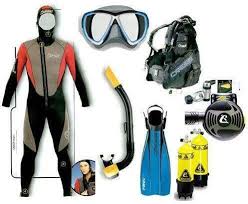
PICTURE OF EQUIPMENT
173
Appendix- ‘A’
SPECIFICATION OF DIVE COMPUTER
1. The dive computer should be water proof chronometer and should be able to monitor diver’s depth,
duration of dive and movement underwater using a series of algorithms.
2. It should facilitate the diver to keep track of your surface-interval duration and to plan the next dive
and should be of non-magnetic material
3. The dive computer should comply with EU standards EN250:2000 and EN13319:2000.
Additionally the key features of the dive computer should include following specifications:-
Sl. Specification Remarks
(a) Display Full color 2.2” QVGA LCD with always on LED backlight
(b) Pressure ( depth) sensor Piezo-resistive
(c) Calibrated Range 0 Bar to 10 Bar
(d) Accuracy +/-20 mBar( at surface)
+/-100 mBar( at 10 bar)
(e) Depth Certification 100 mtrs
(f) Surface Pressure Range 500 mBar to 1040 mBar
(g) Minimum Depth of Dive 1 m of sea water
(h) Operating temperature range +4 ºC to +32ºC
(j) Battery and Battery Operating
Life
Rechargeable and commercially off the shelf available
The battery should function for a period of minimum 24
Hours in 1 charge
(k) Compass Resolution and
Accuracy
1º/35 º
(l) Compass Tilt Compensation Yes, essential to compensate for any roll and pitch
(m) Dive Log Capacity Approximately 1000 hours
(n) Weight Should be less than 200 gms
(p) Size of the Dive Computer Befitting for individual usage on the wrist; allowing the
diver in free operation.
(q) Additional Facility Strap should have an additional locking facility